Article-at-a-Glance
- Strength training after 60 can reverse age-related muscle loss, improving mobility and independence
- Proper form and starting with light resistance prevent injury while maximizing benefits
- Consistency matters more than intensity—training 2-3 times weekly delivers significant results
- Resistance bands offer an affordable, joint-friendly option for beginners before progressing to weights
- MoreLife Health’s comprehensive approach helps seniors develop effective strength routines tailored to individual needs
Why Strength Training Becomes Essential After 60
The importance of strength training dramatically increases after age 60, yet it remains the most overlooked form of exercise among seniors. While walking and swimming get most of the attention, properly designed resistance exercise delivers more comprehensive benefits for aging bodies. Maintaining muscle mass becomes increasingly challenging with each passing decade, but the right strength program can not only halt decline but actually reverse it.
The Silent Muscle Loss You’re Experiencing (Sarcopenia)
After age 30, most adults lose 3-5% of their muscle mass each decade through a process called sarcopenia. This accelerates after 60, leading to a potential 30% loss of total muscle by age 80 if nothing is done to counteract it. What’s particularly concerning is that this loss happens so gradually that most people don’t notice until everyday activities become challenging. The good news? Research shows that resistance training can reverse decades of muscle loss in just months, even for those in their 80s and 90s.
How Lost Strength Affects Daily Life
The impact of diminished strength extends far beyond aesthetic concerns—it fundamentally changes how you live. Simple activities like rising from a chair, carrying groceries, or climbing stairs become increasingly difficult as muscle mass decreases. This loss of functional strength often triggers a dangerous cycle: activities become harder, so you do less, which accelerates further muscle loss. Declining strength also affects balance and stability, with falls representing a serious health risk for older adults. Properly designed strength training directly addresses these functional challenges by strengthening the exact movement patterns needed for daily living.
The Science-Backed Benefits for Your Body and Mind
The research supporting strength training for seniors is overwhelming and extends well beyond just building muscle. Regular resistance exercise has been shown to increase bone density, reducing fracture risk by up to 40% in some studies.
It improves metabolic health by enhancing insulin sensitivity and glucose metabolism, helping manage or prevent type 2 diabetes. For heart health, strength training reduces blood pressure and improves cholesterol profiles nearly as effectively as aerobic exercise.
The cognitive benefits are equally impressive. Multiple studies show resistance training improves memory, attention, and executive function while reducing depression risk. This brain-boosting effect appears linked to increased blood flow and the release of growth factors that support brain cell health.
Perhaps most importantly, strength training enhances sleep quality, with participants in resistance programs reporting falling asleep faster and experiencing deeper, more restorative sleep patterns.
Debunking Myths About Seniors and Weights
Despite overwhelming evidence supporting strength training for older adults, persistent myths keep many from starting. These misconceptions not only prevent seniors from enjoying the benefits of resistance exercise but can actually accelerate age-related decline. Let’s address the most common concerns with facts backed by current research and decades of clinical experience with older exercisers.
No, You’re Not “Too Old” to Start
The belief that strength training is exclusively for the young couldn’t be further from scientific truth. Studies consistently show adults in their 80s and even 90s respond remarkably well to resistance training, often showing proportionally greater improvements than younger exercisers. One landmark study followed 90-year-old nursing home residents through an 8-week strength program, finding an average strength gain of 174% and significant improvements in walking speed and stair-climbing ability. Your muscles maintain their basic ability to adapt and strengthen regardless of age—they simply need the right stimulus and recovery time. Additionally, incorporating foam rollers can improve flexibility and aid recovery, enhancing the overall benefits of your strength training routine.
The Truth About Injury Risk
Many seniors avoid weights fearing injury, yet properly designed strength training actually reduces injury risk by strengthening vulnerable joints and improving stability. The key is starting with appropriate resistance and focusing on proper form. Research shows seniors who strength train experience fewer falls and injuries compared to non-training peers. When injuries do occur, they’re typically from improper technique or attempting too much weight too soon—issues easily prevented with proper instruction.
Gradual progression is essential for safety. Begin with bodyweight exercises or light resistance bands, perfecting form before increasing intensity. This approach minimizes risk while maximizing benefits, allowing your connective tissues to strengthen alongside your muscles.

“9,400+ Older Woman Lifting Weights …” from www.istockphoto.com and used with no modifications.
Women Over 60 Won’t Get “Bulky”
Many women avoid strength training fearing they’ll develop bulky muscles, but this concern is physiologically unfounded, especially after 60. The hormonal profile of post-menopausal women makes significant muscle bulk virtually impossible without extraordinary measures. What actually happens is far more beneficial: increased muscle tone, improved posture, and enhanced definition without bulk. The result is a stronger, more capable body without dramatic changes in appearance. For those interested in other forms of exercise, low-impact water aerobics can also be a great option.
Even dedicated female strength trainers typically see modest increases in muscle size while experiencing substantial gains in strength and function. The focus for seniors should be on developing functional strength for daily activities rather than aesthetic changes. That said, many women report feeling more confident about their appearance after several months of consistent training as posture improves and muscles become more defined.
Before You Start: Safety First
Safety remains the foundation of any effective strength program for seniors. Taking proper precautions before beginning ensures you’ll gain all the benefits while minimizing risks. A thoughtful approach to starting strength training creates confidence and sets the stage for long-term success.
Most seniors can safely begin a moderate strength training program, but certain situations warrant medical clearance first. This isn’t about limiting your potential but ensuring your program aligns with your specific health profile. With the right approach, nearly everyone can participate in some form of resistance training.
Remember that proper preparation prevents problems. The time invested in setting up correctly pays dividends through better results and fewer setbacks. Creating the right foundation makes everything that follows more effective and enjoyable.
When to Check With Your Doctor
While most healthy adults can begin light resistance training without special permission, certain conditions require medical consultation first. If you have uncontrolled high blood pressure, unstable heart disease, recent joint replacement, uncontrolled diabetes, or severe osteoporosis, speak with your healthcare provider. This conversation isn’t seeking permission as much as guidance on any specific modifications you might need. Many doctors now actively prescribe strength training for their older patients, recognizing its therapeutic benefits, similar to the benefits of low-impact water aerobics.
During your consultation, bring specific questions about limitations rather than just asking for general approval. For example, ask about weight restrictions, exercises to avoid, or specific movements that might benefit your condition. This targeted approach provides actionable guidance rather than vague cautions. Even with chronic conditions, modified strength training often becomes part of the treatment plan rather than something to avoid. For those seeking low-impact options, consider exploring water aerobics benefits as an alternative.
Common Health Conditions and Modifications
Most health challenges require adjustments to your strength program rather than abandoning it altogether. For arthritis, focus on controlled movements with moderate resistance, avoiding exercises that cause pain beyond mild discomfort. With osteoporosis, avoid forward bending of the spine and emphasize exercises that strengthen the back and core. Those with hypertension should avoid holding their breath during exertion and may need to use lighter weights with more repetitions.
Joint replacements require special consideration, with specific guidelines depending on which joint was replaced and how recently. Generally, focus on controlled movements with gradually increasing ranges of motion as approved by your physical therapist.
Diabetes may require more frequent monitoring of blood sugar levels, as exercise can significantly impact glucose metabolism. The key is understanding that modifications enable participation rather than prevent it.
Joint-Friendly Modifications
• Reduce range of motion to stay within pain-free zones
• Use resistance bands instead of weights for less joint stress
• Incorporate more rest between sets
• Focus on slow, controlled movements
• Emphasize proper warm-up for joint lubrication
Creating a Safe Workout Space at Home
Your exercise environment significantly impacts both safety and effectiveness. Create a dedicated space with at least 6 feet of clearance in all directions for unrestricted movement. Ensure the floor is non-slip and free of obstacles or trip hazards like loose rugs or cords. Good lighting is essential, especially if you have vision concerns. A sturdy chair without wheels provides support for balance when needed and can be used for seated exercises.
Temperature matters more than you might think. A slightly cool room (68-72°F) prevents overheating during exertion, while proper ventilation maintains comfort throughout your workout. Keep water easily accessible to maintain hydration. Having a phone within reach provides security if assistance is needed. These simple environmental considerations create the optimal foundation for safe, effective training.
Your Essential Strength Training Equipment
The good news is that effective strength training doesn’t require elaborate or expensive equipment, especially when starting. The focus should be on versatile, space-efficient tools that grow with your developing abilities. The right basic equipment provides everything needed for a comprehensive program that can evolve over months and years. For those interested in low-impact exercises, consider exploring the benefits of water aerobics as a complementary fitness activity.
Quality matters more than quantity when selecting equipment. A few well-chosen pieces will serve you better than a collection of novelty items that quickly lose their usefulness. Look for durability, adjustability, and versatility in anything you purchase. With the right approach, an investment of less than $100 can provide everything needed for a comprehensive home strength program.
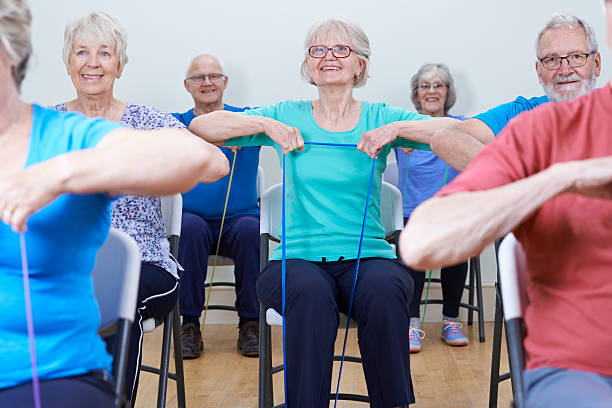
“Resistance Band Exercises For Seniors …” from www.istockphoto.com and used with no modifications.
Beginner-Friendly Resistance Bands
Resistance bands offer an ideal starting point for seniors new to strength training. These lightweight, portable tools provide adjustable resistance by changing your grip position or band thickness. They’re particularly joint-friendly, creating smooth resistance throughout movements without the jarring stress sometimes experienced with free weights. Bands come in different resistance levels, typically color-coded from light to heavy, allowing progression as strength improves. For those looking to enhance recovery, foam rollers can also be a valuable addition to your routine.
Look for a set with multiple resistance levels and comfortable handles. The ability to anchor bands to doors or fixed objects expands exercise options considerably. Many quality sets include illustrated guides to standard exercises. For those with grip limitations, bands with padded handles or loops offer easier ways to hold and control the resistance. MoreLife Health recommends starting with a set that includes at least three different resistance levels to accommodate different exercises and strength progression. Additionally, consider incorporating low-impact water aerobics to complement your resistance band workouts.

“lifting dumbbell weights …” from stock.adobe.com and used with no modifications.
Dumbbells: What Weight to Choose
While resistance bands offer an excellent starting point, adding a few dumbbells provides benefits for certain movements. For most female beginners over 60, a pair of 2-3 pound and 5-8 pound dumbbells creates a versatile foundation. Male beginners typically start with 5-8 pound and 10-15 pound pairs. These ranges accommodate most upper body exercises while providing enough challenge for progress. For those looking to enhance their recovery, incorporating foam rollers can improve flexibility and aid recovery.
Consider adjustable dumbbells if space or budget is limited, allowing multiple weight options in a single compact set. Look for models with secure weight locks and comfortable grips. Hexagonal dumbbells that don’t roll when set down provide additional safety. Neoprene-coated options offer easier grip and protect floors from damage. Remember that starting too heavy risks injury while too light limits results—you should be able to complete 8-12 repetitions with proper form, with the last few feeling challenging.
Stability Tools You’ll Need
Balance challenges naturally increase with age, making stability tools valuable additions to your equipment collection. A simple sturdy chair provides support during standing exercises and serves as a platform for seated movements. Exercise mats offer cushioning for floor exercises while providing a defined workout space with improved traction. For more advanced balance training, stability balls and balance discs introduce controlled instability that strengthens core stabilizing muscles.
The Perfect Beginner’s Workout Plan
The ideal strength program for seniors balances effectiveness with sustainability. It should address all major muscle groups while remaining simple enough to perform consistently. This balanced approach prevents the common problem of programs being either too complicated to follow or too simplistic to produce results. For those looking for an effective and low-impact exercise, consider the benefits of water aerobics as part of your routine.
Consistency trumps complexity every time. A straightforward program done regularly delivers far better results than an elaborate routine performed sporadically. The plan outlined below focuses on fundamental movements that translate directly to improved function in daily activities.
|
Exercise Type |
Benefit |
Daily Activity Impact |
|---|---|---|
|
Lower Body Push |
Leg strength, stability |
Rising from chairs, climbing stairs |
|
Lower Body Pull |
Posterior chain strength |
Maintaining posture, walking endurance |
|
Upper Body Push |
Chest, shoulder, triceps strength |
Pushing doors, cabinets, carrying items |
|
Upper Body Pull |
Back, biceps strength |
Pulling doors, retrieving items from shelves |
|
Core Stability |
Trunk support, balance |
All movements, fall prevention |
Remember that proper rest between workouts allows tissues to recover and strengthen. This doesn’t mean inactivity—light walking or stretching between strength sessions promotes recovery while maintaining mobility. As your body adapts, you’ll notice improved energy and decreased soreness after workouts.
Your workout environment affects performance significantly. Choose a time of day when energy levels are highest, typically morning for most seniors. Ensure adequate hydration before starting, and have water available throughout your session. Proper attire includes supportive shoes and comfortable clothing that doesn’t restrict movement but isn’t so loose it interferes with exercises.
5 Must-Do Exercises for Functional Strength
Certain exercises deliver exceptional value for seniors by directly improving functional abilities while efficiently working multiple muscle groups. Chair squats strengthen the legs and hips crucial for mobility, simulating the standing movement used dozens of times daily. Modified push-ups (against a wall for beginners) build upper body pushing strength needed for everything from opening doors to rising from the floor. Seated rows with resistance bands develop the back muscles essential for posture and pulling movements.
Standing heel raises strengthen calves and ankles for walking stability and stair navigation, while addressing a commonly neglected area. The bird-dog exercise develops core stability and balance by working opposing limbs simultaneously, directly translating to improved coordination in daily activities. These five movements alone create a solid foundation addressing all major movement patterns needed for independence and functionality.
How Often to Train (Frequency Guidelines)
Finding the optimal training frequency balances results with recovery needs. For most seniors, 2-3 strength training sessions per week with at least one day between workouts provides ideal stimulus while allowing adequate recovery. This schedule allows your muscles and connective tissues to repair and strengthen between sessions. Research shows that for beginners, two weekly sessions can produce nearly 80% of the benefits seen with more frequent training.
Consistency matters far more than frequency. Two sessions performed regularly for months will produce dramatically better results than four sessions done sporadically for a few weeks. If you’re just beginning, starting with two weekly sessions builds the habit while minimizing soreness and fatigue. As your body adapts over several weeks, you might consider adding a third session if your recovery allows it.
The Ideal Repetitions and Sets for Beginners
The optimal training volume for seniors balances adequate stimulus with manageable fatigue. For beginners, 1-2 sets of 10-15 repetitions per exercise creates an effective foundation. This range provides sufficient muscle stimulus while allowing proper focus on technique. The final 2-3 repetitions should feel challenging but not impossible, indicating you’ve selected appropriate resistance.
As your fitness improves over several weeks, you might progress to 2-3 sets per exercise. Total workout time should typically stay between 30-45 minutes to prevent excessive fatigue. Remember that quality always trumps quantity—perfect form with fewer repetitions produces better results than poor form with more repetitions. Keep detailed records of your sets, repetitions, and resistance used to track progress objectively.
Rest Periods: Why They Matter
Proper rest intervals between sets directly impact both safety and effectiveness. For most seniors, resting 1-2 minutes between sets provides adequate recovery while maintaining an efficient workout pace. This interval allows heart rate and breathing to normalize while muscles prepare for the next set. Longer rest periods (2-3 minutes) may be appropriate for more challenging exercises or when first starting. To further enhance recovery, consider incorporating foam rollers into your routine.
Pay attention to your body’s signals during rest periods. Breathing should return close to normal, and any light-headedness should completely resolve before beginning the next set. If you need significantly longer than 2-3 minutes to recover, it may indicate the resistance is too challenging and should be reduced. Structured rest isn’t wasted time—it’s when your energy systems recharge, allowing quality effort in subsequent sets. For additional recovery tips, consider using foam rollers to improve flexibility.
Proper Form and Technique
Technique matters more than any other factor in safe, effective strength training. Perfect form maximizes results while minimizing injury risk, making it worth the initial investment to learn proper movement patterns. The benefits of proper technique extend beyond safety—correctly performed exercises target intended muscles more effectively, accelerating progress.
Core Engagement: Your Secret Weapon
The foundation of all strength movements begins with proper core activation. Think of your core as a natural weight belt that stabilizes your spine during exertion. Before each exercise, gently draw your navel toward your spine without holding your breath or creating rigid tension. This subtle engagement creates a stable platform for limb movements while protecting your lower back. For those looking to enhance flexibility and recovery, consider incorporating foam rollers into your routine.
Core engagement should feel like preparation, not strain. You should be able to breathe normally while maintaining this gentle activation. For seated exercises, sit toward the front portion of the chair rather than leaning against the backrest, which enables proper core involvement. Remember that core stability isn’t about creating maximum tension—it’s about creating appropriate stability for the specific movement you’re performing. For more detailed guidance, you can explore this strength training guide.
Breathing Pattern During Exercise
Proper breathing technique prevents dangerous blood pressure spikes while enhancing performance. The fundamental rule is to exhale during exertion (the hard part) and inhale during the easier phase. For example, when performing a chair squat, exhale while standing up and inhale while lowering yourself. This pattern prevents the Valsalva maneuver—holding your breath during exertion—which can cause dramatic blood pressure increases.
Your breathing should remain rhythmic and controlled throughout each movement. If you find yourself holding your breath or breathing erratically, it often indicates the weight is too heavy or you’re losing focus on technique. Some exercises may require multiple breaths during a single repetition, which is perfectly acceptable, especially during slower movements. The key is continuous, natural breathing without prolonged breath-holding.
Common Form Mistakes to Avoid
Several technique errors appear frequently among beginners. Rushing repetitions reduces effectiveness and increases injury risk—aim for controlled, deliberate movements taking 2-3 seconds in each direction. Using momentum (swinging weights or bands) transfers stress from muscles to joints and reduces effectiveness. Improper alignment, particularly allowing knees to collapse inward during leg exercises, creates dangerous joint stress.
Overarching the lower back during standing exercises places excessive pressure on spinal structures—maintain your natural spinal curves without exaggerating them. Incomplete ranges of motion diminish results and can create muscle imbalances over time. When you cannot maintain proper form for the targeted repetition range, it’s time to reduce the resistance rather than compromising technique.
Your 4-Week Progression Plan
A structured approach to advancing your training creates consistent progress while managing fatigue and preventing plateaus. This gradual progression strategy builds confidence alongside strength, making the process both effective and enjoyable. The following four-week plan provides a framework adaptable to individual needs and responses. For additional support, consider incorporating foam rollers to improve flexibility and aid recovery.
Week 1: Building Foundation and Confidence
Focus exclusively on learning proper movement patterns using minimal resistance. For most exercises, begin with just bodyweight or the lightest resistance band. Perform 1 set of 10-12 repetitions of each exercise, concentrating entirely on perfect technique rather than physical challenge. Rest periods can be longer (2-3 minutes) to ensure complete recovery between exercises.
Schedule two training sessions this week, separated by at least two days of rest. Keep detailed notes on how movements feel and any areas of uncertainty. Success in this phase means developing comfort and confidence with each movement pattern, not feeling physically challenged. This foundation-building week may feel too easy physically, but the technical learning happening now prevents problems in subsequent weeks.
Week 2: Adding More Resistance
Building on your movement foundation, introduce appropriate resistance that creates moderate challenge. You should now be able to complete 12-15 repetitions with the last few feeling somewhat difficult while maintaining perfect form. Continue with two weekly sessions, but now perform 2 sets of each exercise with 1-2 minutes rest between sets. For more detailed guidance, consider checking out this strength training guide.
Pay close attention to how your body responds in the 24-48 hours following each session. Mild muscle soreness is normal, but should not interfere with daily activities. Adjust resistance based on your experience—if an exercise feels too challenging to complete with proper form, reduce the resistance slightly. If you can easily perform more than 15 repetitions, consider increasing resistance for your next session. To aid recovery and improve flexibility, consider using foam rollers as part of your routine.
Weeks 3-4: Increasing Intensity Safely
With fundamental movements now established, focus on progressive overload—the gradual increase in training stress that drives adaptation. Add a third weekly session if recovery allows, ensuring at least one rest day between strength workouts. Increase to 2-3 sets per exercise while adjusting resistance to keep repetitions in the 10-12 range with the final repetitions challenging but achievable.
By the end of week 4, you should notice significant improvements in exercise confidence, movement quality, and the resistance you can handle with proper form. This four-week foundation creates the perfect launching point for continued progress. From here, you can maintain this level for several more weeks or continue gradual progression based on your goals and response.
Nutrition Essentials for Muscle Building After 60
Optimizing nutrition becomes increasingly important for supporting strength gains after 60. Your body requires specific nutritional support to build and maintain muscle tissue, especially as digestive efficiency and metabolic rate naturally change with age. Simple nutritional strategies can significantly enhance your results from strength training.
Protein Needs for Recovery
Adequate protein intake becomes crucial for seniors engaged in strength training as both age and exercise increase protein requirements. Research suggests adults over 60 need approximately 1.0-1.2 grams of protein per kilogram of body weight daily, with those actively strength training potentially benefiting from up to 1.6 grams per kilogram. This typically translates to 20-30 grams of quality protein with each meal, focusing on complete protein sources containing all essential amino acids.
Timing matters nearly as much as total quantity. Distributing protein intake evenly throughout the day optimizes muscle synthesis better than consuming most protein in a single meal. Including a protein-rich snack or shake containing 15-25 grams of protein within an hour after strength training accelerates recovery and enhances adaptation. If appetite is limited, as is common in some seniors, liquid protein supplements can provide concentrated nutrition in a more easily consumed form.
Hydration Requirements
Proper hydration directly impacts exercise performance and recovery, yet many seniors don’t consume adequate fluids. Even mild dehydration reduces strength by 5-10% and dramatically increases perceived exertion. Aim for at least 2-3 liters of fluid daily, with additional intake on exercise days. Clear or light yellow urine generally indicates adequate hydration.
Water requirements increase with age as thirst sensation often diminishes, making scheduled drinking more important than relying on thirst alone. Consider setting specific hydration times throughout the day. While plain water provides excellent hydration, adding electrolytes becomes important during longer sessions or hot conditions. Caffeinated beverages can contribute to fluid intake, but should compose no more than one-third of your total fluid consumption.
Supplements That Actually Help (And Those That Don’t)
While whole foods should form the foundation of your nutrition plan, certain supplements may offer benefits for seniors engaged in strength training. Vitamin D and calcium support bone health, with many seniors showing insufficient vitamin D levels even in sunny climates. Omega-3 fatty acids may reduce exercise-induced inflammation and support joint health. For those struggling to consume adequate protein, whey protein supplements offer a convenient, easily-absorbed option with particularly beneficial amino acid composition for muscle recovery.
However, many heavily marketed supplements show little evidence for effectiveness in seniors. Testosterone boosters, most pre-workout formulas, and many “anti-aging” supplements typically provide minimal benefits despite significant costs. Creatine, while beneficial for younger adults, shows mixed results in seniors. Before adding any supplement, consult healthcare providers to ensure it doesn’t interact with medications or existing health conditions.
Tracking Progress Beyond the Scale
Effective progress tracking motivates continued effort while helping identify successful strategies. While weight changes may occur with strength training, they poorly reflect the most important adaptations happening in your body. Comprehensive progress monitoring looks beyond weight to functional improvements, body composition changes, and performance metrics.
Strength Benchmarks to Celebrate
Recording specific performance metrics provides objective evidence of improvement. Track the weight or resistance band level used for key exercises, noting when you can complete your target repetitions with perfect form. Document workout duration and recovery time between sets, which typically decrease as cardiovascular fitness improves. Note exercise modifications and when you progress to more challenging variations.
Create milestone celebrations for significant achievements. Examples include performing your first unassisted chair stand, completing exercises with the next resistance band level, or increasing workout frequency. These concrete achievements provide more meaningful feedback than scale weight. Consider keeping a dedicated strength journal recording both numbers and subjective experiences—how exercises feel, energy levels, and any challenging areas.
How to Measure Functional Improvements
Real-world functional improvements represent the most meaningful progress markers. Periodically assess activities that were previously challenging, such as climbing stairs without handrail support, rising from low chairs, or carrying groceries. Note improvements in balance, like standing on one foot while brushing teeth or walking in a straight line heel-to-toe. Measure walking speed over a set distance, as increased walking velocity strongly correlates with overall health and independence.
Consider performing standardized functional assessments monthly. The 30-second chair stand test (counting complete sit-to-stand movements in 30 seconds) provides excellent feedback on lower body strength progress. The 8-foot up-and-go test (time required to rise from a chair, walk 8 feet, return and sit) measures agility and dynamic balance. These simple assessments provide objective measurements of functional fitness improvements.
Simple Functional Tests to Track Progress
• 30-second chair stand (normal range for 65-69 years: 12-18 stands)
• 8-foot up-and-go test (normal range for 65-69 years: 5.6-7.3 seconds)
• Single-leg stance time (normal range for 65-69 years: 14-28 seconds)
• 6-minute walk test (normal range for 65-69 years: 400-700 meters)
• Hand grip strength (normal range varies by gender/age)These functional tests not only track progress but also identify specific areas needing additional focus. Improvements in these measures correlate strongly with reduced fall risk and extended independent living. Recording videos of yourself performing these tests provides visual evidence of posture and movement quality improvements that numbers alone don’t capture.
Remember that progress isn’t always linear. Temporary plateaus and even occasional setbacks represent normal parts of the improvement process rather than failures. Consistent effort over months produces remarkable changes that might seem small when measured day-to-day but become transformative when viewed over longer periods.
When and How to Advance Your Training
Thoughtful progression maintains continuous improvement while preventing plateaus and injuries. Your body adapts specifically to the demands placed upon it, requiring periodic changes to stimulate further development. However, advancing too quickly increases injury risk while advancing too slowly limits potential gains.
The principle of progressive overload—gradually increasing training stress—applies throughout your strength journey. This doesn’t always mean using heavier weights. Various progression strategies target different aspects of fitness while keeping workouts fresh and engaging.
Remember that progression speed should match your individual response and goals. Competitive progression often leads to technique compromises and increased injury risk. Instead, focus on mastery at each level before advancing, creating a solid foundation for sustainable, long-term improvement.
Signs You’re Ready for More Challenge
Several indicators suggest readiness for increased training challenge. When you can consistently perform 15 or more repetitions with perfect form, the current resistance likely no longer provides adequate stimulus.
Exercises that once felt challenging now feel comfortable throughout the entire set. Recovery between workouts happens more quickly, with minimal or no soreness the following day.
Subjective experiences provide equally important feedback. You might feel mentally ready for greater challenges, with current workouts feeling more like maintenance than development.
Movements that initially required conscious focus now feel natural and automatic. Daily activities that once taxed your strength now feel significantly easier. These combined signals indicate your body has adapted to current demands and is prepared for the next challenge.
Smart Ways to Increase Intensity
Multiple progression strategies allow customized advancement based on equipment availability and personal preferences. The most straightforward approach increases resistance by moving to the next band level or adding small weight increments (1-3 pounds for upper body, 5-10 pounds for lower body exercises). Alternatively, increase repetitions to 15-20 before adding resistance, which develops muscular endurance alongside strength.
Adding Variety Without Adding Risk
Introducing exercise variations maintains engagement while challenging muscles in slightly different patterns. Simple modifications like changing hand positions, foot stance width, or moving from seated to standing versions of the same exercise create new challenges without requiring entirely new movement patterns.
Exercise order changes and tempo modifications (particularly slowing the lowering phase) increase difficulty without adding external resistance. For those looking to diversify their routine, incorporating low-impact water aerobics can also offer a refreshing change while minimizing risk.
Strength Training Success After 60
The journey to improved strength after 60 offers rewards extending far beyond physical changes. Consistent strength training not only rebuilds muscle and enhances function but often transforms self-perception and life outlook.
Many seniors report that strength improvements create a positive spiral affecting all aspects of wellness—better sleep, improved mood, enhanced confidence, and greater social engagement through increased activity capacity.
Frequently Asked Questions
As you begin your strength training journey, questions naturally arise about various aspects of the process. These represent the most common concerns expressed by seniors beginning resistance training programs. Remember that while general guidelines apply to most situations, individual differences in health status, fitness background, and personal goals may require personalized adjustments.
Always prioritize safety and proper progression, regardless of how quickly or slowly others around you might advance. Your strength journey represents a personal path, with success measured by your improved function and quality of life rather than comparisons to others.
How long before I notice improvements in strength?
Most seniors notice meaningful strength improvements within 2-4 weeks of beginning a consistent program. However, these initial gains primarily come from neuromuscular adaptation—your nervous system learning to activate muscles more efficiently—rather than muscle growth. Visible changes in muscle tone typically become apparent after 6-8 weeks, while significant muscle growth requires 3-6 months of consistent training.
- First 2-4 weeks: Better movement coordination and technique
- 4-6 weeks: Noticeable strength increases in daily activities
- 6-12 weeks: Improved muscle tone and endurance
- 3-6 months: Visible muscle definition changes
- 6+ months: Substantial strength gains and functional improvements
These timelines vary considerably based on training consistency, nutritional support, and individual factors like genetics and hormonal status. Those returning to strength training after a break typically progress faster than true beginners due to muscle memory—the neuromuscular system’s ability to regain previous fitness levels more quickly than establishing them initially.
Functional improvements often precede visible changes. You’ll likely notice daily activities becoming easier before seeing significant physical transformations. This functional progress—climbing stairs more easily, carrying groceries without fatigue, or rising from chairs without assistance—represents the most meaningful measure of program success.
Patience and consistency yield the greatest long-term results. Many seniors make the mistake of abandoning programs prematurely, just before the most significant benefits begin appearing. Trust the process and focus on gradual, sustainable progress rather than dramatic short-term changes.
Can I do strength training with arthritis?
Not only can you strength train with arthritis, but properly designed resistance exercise represents one of the most effective interventions for managing arthritis symptoms. Multiple studies show strength training reduces arthritis pain by 35-40% while improving function by similar amounts. The key lies in appropriate exercise selection, proper warm-up, and gradual progression that respects pain boundaries without avoiding challenge entirely.
Should I feel sore after every workout?
Moderate muscle soreness (technically called Delayed Onset Muscle Soreness or DOMS) commonly occurs when beginning strength training but should not persist as a regular feature of established programs. Initial soreness indicates unaccustomed stress on muscles and connective tissues, typically peaking 24-48 hours after exercise before gradually resolving. As your body adapts to consistent training, soreness should become minimal even as strength continues improving.
Excessive or prolonged soreness suggests either advancing too quickly or insufficient recovery between sessions. Sharp or sudden pain during exercise differs from normal muscle soreness and requires immediate attention to technique and possibly resistance reduction. The goal isn’t creating maximum soreness but rather providing sufficient stimulus for adaptation while maintaining function between sessions.
Can I combine strength training with my walking routine?
Combining strength training with walking creates an ideal comprehensive fitness program addressing all major components of physical health. These complementary activities develop different aspects of fitness—walking builds cardiovascular endurance while strength training develops muscular strength and power. The optimal approach performs both activities on the same day for some sessions (separating them by several hours when possible) and on alternate days for others, ensuring adequate recovery while maintaining consistency.
What if I can’t do some of the recommended exercises?
Exercise modifications allow participation regardless of current limitations. Nearly every movement can be adapted to accommodate joint issues, balance concerns, or strength limitations. For example, chair squats can become partial-range seated marches, floor exercises can move to seated versions, and resistance bands can replace weights for gentler joint stress. Work with a qualified fitness professional to develop appropriate modifications matching your specific needs, or explore low-impact exercise options that are easier on the joints.
View modifications as smart adaptations rather than compromises. The goal remains providing appropriate stimulus for your current capacity, whether that means the standard version or a highly modified alternative. Many seniors begin with modified versions and gradually progress toward standard exercises as strength and confidence improve.
For comprehensive guidance on developing a personalized strength training program tailored to your specific needs, specialized coaching and resources designed specifically for adults over 60 beginning their strength journey are recommended.
Strength training is essential for maintaining muscle mass and bone density as we age. It’s especially important for those over 60 to engage in exercises that are safe and effective. Incorporating tools like foam rollers can be beneficial. These tools improve flexibility and aid recovery, making them a great addition to any senior fitness routine.



Leave a Reply