
Key Takeaways
- Techniques like chunking, spaced repetition, and visualization can double your memory retention compared to passive review.
- Getting 7-9 hours of quality sleep is crucial for memory consolidation, with each sleep cycle strengthening different types of memories.
- A diet rich in omega-3 fatty acids, antioxidants, and specific nutrients directly impacts brain health and memory function.
- Regular physical exercise increases BDNF (brain-derived neurotrophic factor), which promotes new brain cell growth and enhances memory capacity.
- Creating a structured 30-day memory improvement plan can systematically build your recall abilities through consistent practice.
Struggling to remember important information? You’re not alone. Whether you’re a student preparing for exams, a professional trying to remember client details, or simply wanting to recall where you put your keys, memory challenges affect us all. The good news is that memory isn’t just something you’re born with—it’s a skill you can develop with the right techniques and habits.
Memory improvement isn’t about quick fixes or miracle supplements. It’s about understanding how your brain naturally processes and stores information, then working with these mechanisms rather than against them. The techniques in this guide are backed by neuroscience and cognitive psychology, offering practical strategies you can implement today.
7 Science-Backed Memory Techniques That Actually Work
The difference between average and exceptional memory often comes down to method, not natural ability. These proven techniques leverage how your brain naturally encodes information, making recall easier and more reliable. By incorporating these strategies into your learning process, you’ll find yourself remembering more with less effort.
The Chunking Method: Group Information for Better Recall
Your brain processes information more efficiently when it’s organized into meaningful groups. This technique, called chunking, helps overcome the natural limitations of working memory. Instead of trying to remember a string of 10 random digits, you might break them into three chunks that resemble phone numbers (e.g., 800-555-4321). Research shows that chunking can expand your immediate memory capacity from the typical 7±2 items to much larger amounts of information.
Apply chunking by organizing information into logical categories or patterns. When memorizing a shopping list, group items by their location in the store (produce, dairy, etc.). For complex concepts, create hierarchical structures where main ideas branch into supporting details. This creates a mental filing system that makes both storage and retrieval more efficient. For those interested in fitness, low-impact water aerobics can be a great way to categorize exercises based on intensity and impact.
Spaced Repetition: Review Information at Strategic Intervals
Forgetting follows a predictable curve—we lose information quickly at first, then more slowly over time. Spaced repetition counters this natural forgetting process by scheduling reviews right before you’re likely to forget. Instead of cramming all at once, space your study sessions over increasing intervals: review new information within a few hours, then after a day, then after several days, and finally after a few weeks. For those over 60, combining mental exercises with strength training can also enhance cognitive function and memory retention.
This technique works because each retrieval strengthens the neural pathways associated with that memory, making future recall easier. Digital apps like Anki and RemNote can automate this process, scheduling reviews based on your performance. Studies show spaced repetition can improve long-term retention by 200-300% compared to mass learning in a single session. For those interested in maintaining cognitive health and performance, consider integrating essential diet tips to support brain function.
Visualization: Turn Abstract Ideas into Mental Images
Your brain has remarkable capacity for remembering visual information. By converting abstract concepts or text into vivid mental images, you tap into this visual processing power. The more unusual, colorful, or emotionally charged your visualization, the more memorable it becomes. For example, to remember that mitochondria are the “powerhouses of the cell,” you might visualize tiny power plants with smokestacks inside each cell. If you’re interested in improving your mental flexibility, consider exploring how foam rollers improve flexibility and aid recovery.
This technique works because it engages multiple brain regions simultaneously and creates stronger memory traces. Memory champions use this approach to perform seemingly impossible feats like memorizing the order of multiple decks of cards. The key is creating images that are personally meaningful and connecting them to the information you need to recall. For those interested in enhancing their physical health alongside mental acuity, exploring strength training for seniors can be a beneficial addition to their routine.

Your Brain on Sleep: How Rest Transforms Memory
Sleep isn’t just rest for your tired body—it’s essential processing time for your brain. During sleep, your brain sorts through the day’s experiences, strengthening important connections while pruning away less relevant information. This process, called memory consolidation, transforms fragile short-term memories into more stable long-term ones that you can access days, months, or even years later.
Sleep Cycles and Memory Consolidation
Not all sleep is created equal when it comes to memory formation. Different sleep stages benefit different types of memory. During deep slow-wave sleep (SWS), your brain primarily consolidates explicit factual knowledge and episodic memories. This is when you cement names, dates, and information you’ve consciously tried to learn. REM sleep, characterized by rapid eye movements and dreaming, specializes in implicit procedural memory and creative problem-solving.
Sleep Stage Impact on Memory Types
Deep Sleep (SWS): Declarative memories, facts, vocabulary, names
REM Sleep: Procedural memory, complex patterns, emotional processing
NREM Stage 2: Motor skills, physical learning
Complete Cycle: Integration of all memory types for comprehensive recall
A full night’s sleep with multiple complete cycles provides the optimal environment for memory consolidation. Research at Harvard Medical School found that participants who slept after learning new information showed 20-40% better retention compared to those who remained awake for the same period. This explains why “sleeping on it” often leads to better recall the next day.
The 90-Minute Rule for Optimal Brain Recovery
Your brain operates on approximately 90-minute cycles throughout the day called ultradian rhythms. These natural energy patterns affect your alertness, focus, and memory capacity. Working with these cycles rather than against them can dramatically improve your memory retention. Try studying or working intensely for 90 minutes, then taking a 20-30 minute break to allow your brain to recover and process information. For more insights on maintaining a robust memory, consider exploring healthy habits for a robust memory.
During these breaks, your brain continues working on the material subconsciously through a process neuroscientists call “diffuse mode” thinking. This is when connections between concepts often form, leading to those “aha!” moments that seem to come out of nowhere. Students who study using this rhythmic approach show significantly better retention than those who push through fatigue with marathon study sessions.
How to Create a Sleep Routine That Strengthens Memory
Consistent, quality sleep requires more than just adequate hours—it demands good sleep hygiene. Create a pre-sleep routine that signals to your brain that it’s time to transition into memory consolidation mode. Dim lights 1-2 hours before bedtime to boost melatonin production, avoid screens that emit blue light, and keep your bedroom cool (around 65°F or 18°C) for optimal sleep architecture.
Time your learning strategically around sleep for maximum retention. Research shows that studying difficult material shortly before sleeping leads to better recall than studying the same material earlier in the day. This works because you minimize the interference period between learning and consolidation. For particularly challenging information, a brief review in the morning after a full night’s sleep can further strengthen those newly formed memory pathways.
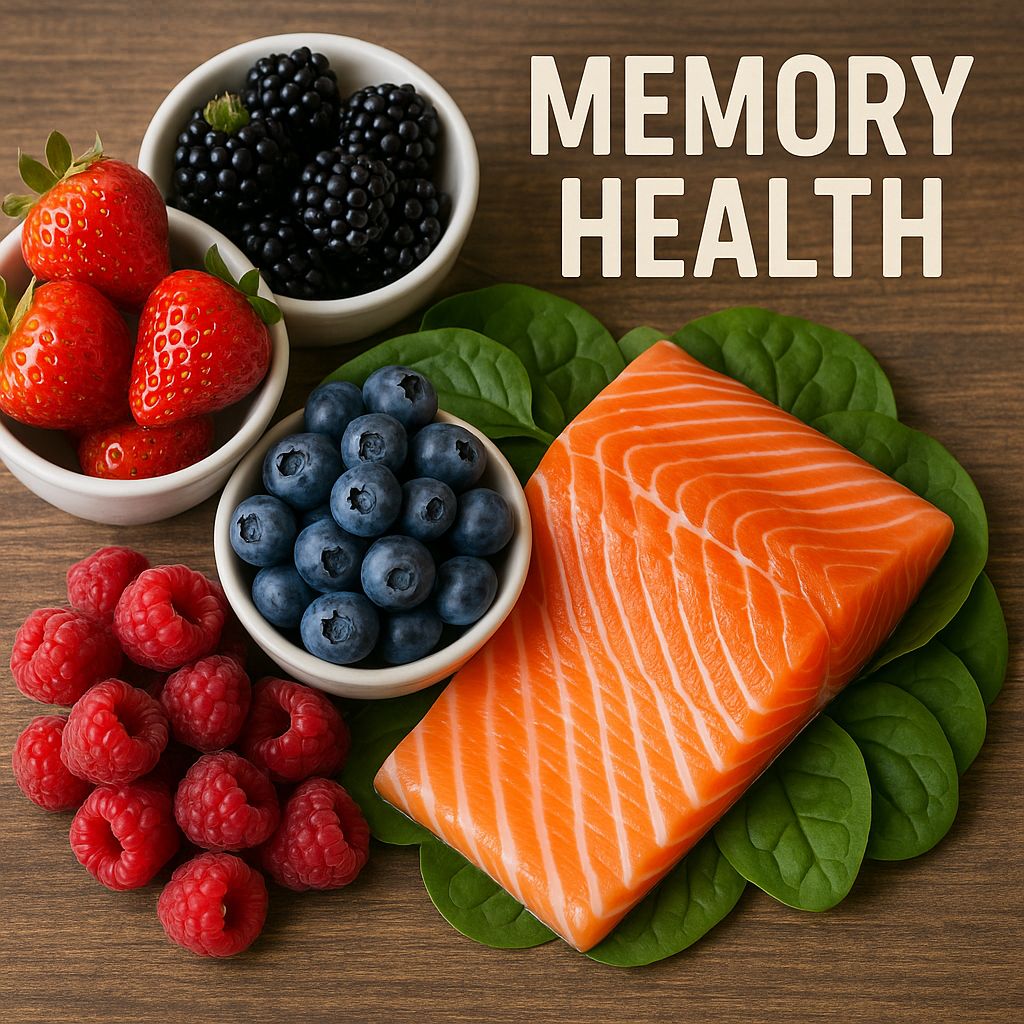
Brain-Boosting Foods That Enhance Memory Function
What you eat directly affects how your brain functions, including its ability to form and retrieve memories. Your brain consumes approximately 20% of your daily calories despite making up only 2% of your body weight. Providing the right nutrients can enhance everything from attention span to memory consolidation and retrieval speed.
1. Fatty Fish Rich in Omega-3s
Fish like salmon, mackerel, and sardines contain high levels of DHA and EPA—omega-3 fatty acids that form a significant portion of your brain’s physical structure. These essential fats help maintain the flexibility of neural membranes, allowing for faster signal transmission between neurons. Studies show that regular consumption of omega-3 rich foods correlates with increased gray matter in brain regions responsible for memory.
If you don’t consume fish regularly, consider alternative sources like walnuts, flaxseeds, or high-quality supplements. The recommended intake is at least two servings of fatty fish per week or the equivalent from plant sources. For those with existing memory concerns, research suggests that higher doses under medical supervision may provide additional benefits.
2. Berries and Dark-Colored Fruits
Blueberries, blackberries, strawberries, and other deeply pigmented fruits contain powerful antioxidants called flavonoids that combat oxidative stress in brain cells. This oxidative damage accumulates with age and is a major contributor to memory decline. A landmark study from Tufts University found that participants who consumed blueberries daily showed significant improvements in spatial memory and learning capacity after just 12 weeks. For more insights, you can explore the best ways to keep your memory sharp.
The anthocyanins in these fruits also promote blood flow to the brain and stimulate the growth of new neurons—a process called neurogenesis that was once thought impossible in adult brains. Adding a cup of mixed berries to your daily diet provides both immediate cognitive benefits and long-term protection against memory deterioration. For those interested in enhancing their overall well-being, exploring low-impact water aerobics can be a great complement to a healthy diet.
3. Leafy Greens and Their Memory Benefits
Dark leafy vegetables like spinach, kale, and Swiss chard are memory powerhouses thanks to their high concentrations of folate, vitamin E, carotenoids, and flavonoids. These nutrients work synergistically to protect neurons from damage and inflammation while supporting the formation of new neural connections. The Rush Memory and Aging Project found that participants who ate one or more servings of leafy greens daily had cognitive abilities comparable to people 11 years younger. For those interested in maintaining cognitive health, incorporating strength training over 60 can also be beneficial.
These vegetables are particularly rich in lutein and zeaxanthin, two carotenoids that concentrate in brain regions involved in learning and memory. A simple way to incorporate more greens is by adding a handful to smoothies, eggs, pasta dishes, or soups—even when not the main ingredient, they provide substantial brain benefits.
4. Nuts, Seeds, and Healthy Fats
Walnuts, almonds, hazelnuts, and seeds provide a potent mix of vitamin E, zinc, folate, and healthy fats that support memory function. Walnuts in particular stand out for their high alpha-linolenic acid content, a plant-based omega-3 fatty acid essential for brain health. Their unique combination of polyphenols and other bioactive compounds creates a neuroprotective effect that can improve both short and long-term memory performance.
Research from UCLA found that regular nut consumption correlates with stronger EEG (electroencephalogram) brain wave patterns associated with cognition and memory. While nuts are calorie-dense, even small amounts (as little as 1-2 ounces daily) provide measurable cognitive benefits. Pairing them with fruit creates a complete brain-boosting snack that balances fats, proteins, and complex carbohydrates.
5. Dark Chocolate and Cocoa Flavanols
Dark chocolate containing at least 70% cocoa solids offers significant memory benefits through compounds called flavanols. These bioactive elements increase blood flow to memory-specific brain regions, enhance neuron-to-neuron communication, and stimulate the production of brain-derived neurotrophic factor (BDNF)—essentially fertilizer for brain cells. A study in Nature Neuroscience found that participants consuming high-flavanol cocoa for three months showed dramatic improvements in pattern recognition memory tasks.

“Senior Women Exercising Stock Photos …” from www.istockphoto.com and used with no modifications.
Physical Exercise: The Memory Workout Your Brain Needs
Exercise affects memory through multiple mechanisms, making it possibly the most powerful non-pharmaceutical enhancer of cognitive function available. Regular physical activity increases blood flow to the brain, reduces inflammation, balances mood-regulating neurotransmitters, and triggers the release of growth factors that stimulate new neural connections. All these effects combine to create both immediate and long-term memory benefits. For more information on maintaining a robust memory, you can embrace healthy habits recommended by experts.
The impact is so profound that researchers at the University of British Columbia found that regular aerobic exercise increases hippocampal volume—the memory center of the brain that typically shrinks with age. This structural change correlates directly with improved memory performance, especially in verbal learning and recall tasks. Even more remarkably, these benefits appear regardless of your age when you start exercising.
How Movement Creates New Brain Cells
Contrary to previous scientific belief, your brain continues producing new neurons throughout your life in a process called neurogenesis. Physical exercise dramatically accelerates this process by increasing production of BDNF (brain-derived neurotrophic factor), often described as “miracle-gro” for brain cells. This protein encourages the growth of new neurons and strengthens existing neural pathways, particularly in the hippocampus where memories are processed and stored.
The 3 Types of Exercise With Greatest Memory Impact
While all forms of exercise benefit your brain, research has identified three specific types that have the strongest impact on memory formation and retention. Aerobic exercise, like running, swimming, or cycling, increases cardiovascular function and delivers oxygen-rich blood to your brain. Even moderate-intensity activities like brisk walking for 30-45 minutes several times weekly improve memory performance by 15-20% in studies.
Resistance training, using weights or body resistance, complements aerobic benefits by regulating insulin sensitivity and reducing inflammation markers that can impair cognitive function. The third key type, coordination exercises like dance, tennis, or tai chi, activates multiple brain regions simultaneously, forming new neural pathways that enhance cognitive flexibility and memory integration. The ideal routine incorporates all three types, but consistency matters more than perfection—even 10-minute movement sessions provide measurable memory benefits.
Daily Habits That Damage Your Memory (And How to Fix Them)
Understanding what harms memory is just as important as knowing what helps it. Many common daily habits unknowingly sabotage our cognitive functions, creating barriers to effective memory formation and retrieval. By identifying and modifying these habits, you can remove obstacles that have been limiting your memory potential for years. For example, incorporating foam rolling to improve flexibility can also enhance overall cognitive health.
Digital Distraction and Attention Fragmentation
Constant notifications, app-switching, and digital multitasking fragment your attention and prevent the deep focus necessary for memory encoding. Each interruption forces your brain to switch contexts, creating a phenomenon neuroscientists call “attention residue” where part of your mental resources remain stuck on the previous task. Studies show that it takes an average of 23 minutes to fully refocus after an interruption, making continuous partial attention the enemy of memory formation.
The solution isn’t abandoning technology but managing it intentionally. Try batch-processing notifications at scheduled times rather than responding immediately. Use “do not disturb” modes during learning sessions, and consider apps like Forest or Freedom that block distractions. Creating technology-free zones in your home and establishing device-free time periods can dramatically improve memory encoding by allowing your brain to process information without constant interruption.
Stress Hormones That Erase Memory
Chronic stress floods your system with cortisol, a hormone that damages the hippocampus when present in high amounts over extended periods. This physiological response evolved to help us survive immediate threats, not the persistent stressors of modern life. When cortisol levels remain elevated, they interfere with the neural mechanisms responsible for forming new memories and accessing existing ones.
Combat this memory-erasing effect through regular stress-reduction practices like mindfulness meditation, deep breathing exercises, or progressive muscle relaxation. Even brief daily sessions (5-10 minutes) have been shown to lower cortisol levels and improve memory performance. Physical activities like walking in nature or gentle yoga provide dual benefits by reducing stress hormones while increasing BDNF production. For persistent stress, cognitive-behavioral techniques that change how you interpret and respond to stressors can create lasting improvements in both stress levels and memory function.
Multitasking Myths and Single-Tasking Solutions
What we call “multitasking” is actually rapid task-switching, and it comes at a significant cognitive cost. Each switch divides your attention resources, preventing the full encoding necessary for strong memory formation. Neuroimaging studies show that attempting to multitask reduces activity in the hippocampus, explaining why information processed during multitasking is poorly remembered later.
Replace multitasking with “single-tasking”—giving your complete attention to one task for a defined period. The Pomodoro Technique, which involves 25 minutes of focused work followed by a 5-minute break, provides a structured approach to single-tasking. For learning or memory-intensive tasks, consider the “immersion method” of longer, deeper focus sessions in environments specifically designed to minimize distractions. When you need to remember something important, give it your full attention for at least 8 seconds—the minimum time research suggests is necessary for transferring information from working memory to longer-term storage. Additionally, incorporating foam rollers into your routine can improve flexibility and aid recovery, which can help maintain focus during these sessions.
Memory Palace Technique: Build Your Mental Storage System
The Memory Palace (or Method of Loci) is perhaps the most powerful mnemonic system ever developed, used by memory champions to perform seemingly impossible feats of recall. This ancient technique leverages your brain’s exceptional spatial memory abilities, converting abstract information into visual elements placed along a familiar spatial journey. By mentally walking through this journey, you can retrieve the information in sequence with remarkable accuracy.
Step-by-Step Guide to Creating Your First Memory Palace
Begin by selecting a location you know intimately—your home, office, or a familiar walking route. Mentally map out a specific path through this location with 5-10 distinct stopping points. These points should be sequential and easily visualized, like furniture in your living room or landmarks along a commute. The key is choosing locations you can mentally navigate without effort. To enhance your memory and cognitive function, consider incorporating essential dietary tips as part of your routine.
Next, convert the information you want to remember into vivid, unusual images. For example, if memorizing a grocery list, you might imagine giant eggs dancing on your sofa (eggs), a fountain of milk spraying from your coffee table (milk), and loaves of bread stacked like a tower on your TV stand (bread). Make these images interactive, colorful, and emotionally engaging—the more outlandish, the more memorable. When retrieving the information, simply take a mental walk through your palace, observing each location and translating the images back into the original information.
Using Spatial Memory to Store Complex Information
While initially used for simple lists, memory palaces can store complex, interconnected information. For detailed material like scientific concepts or historical events, create multi-level palaces where each room or area contains related information. Use the furniture or features within each space for specific details, creating a hierarchical organization system. Advanced practitioners maintain multiple memory palaces simultaneously, each dedicated to different subjects or categories of information.
With practice, this technique becomes increasingly powerful. Memory champions often create palaces with hundreds of locations, allowing them to memorize entire decks of playing cards, long number sequences, or pages of text verbatim. The true beauty of this method is that it improves with use—the more you practice, the more locations you can maintain and the more vividly you can populate them with memorable images.
Practical Memory Training Exercises You Can Do Today
Memory improvement doesn’t require special equipment or settings—just consistent practice with proven techniques. These exercises can be integrated into your daily routine, turning ordinary moments into opportunities to strengthen your memory circuits. The key is regular practice, starting with simple applications and gradually increasing complexity as your skills improve.
1. The Story Method for Linked Lists
The story method transforms disconnected items into a coherent narrative, making them significantly easier to remember. To practice, take any list—shopping items, tasks, vocabulary words—and create a vivid, unusual story that links each item to the next. The more exaggerated and sensory-rich your story, the more memorable it becomes. For example, to remember milk, eggs, bread, and apples, you might imagine swimming in a lake of milk (milk), finding giant eggs floating on the surface (eggs), using a loaf of bread as a boat (bread), and finally reaching an island with apple trees (apples).
Start with short lists of 5-7 items and gradually increase the length as your skills improve. The beauty of this technique is its flexibility—you can make stories humorous, adventurous, or even slightly bizarre, depending on what resonates with you. Testing yourself by recalling the story forward and backward further strengthens the neural connections. With practice, you’ll be able to quickly create and remember stories with dozens of connected elements.
2. Association Techniques for Names and Faces
Forgetting names immediately after introductions is a common memory complaint with a simple solution. When meeting someone new, create a vivid association between their name and a distinctive facial feature. For “Thomas with the bright blue eyes,” imagine tiny traffic lights (Thomas) flashing in his blue eyes. For “Sandra with the curly hair,” visualize sandy beaches (Sandra) sprinkled throughout her curls. The key is making the association immediate, personal, and visually striking.
Practice this technique when watching television shows, during video calls, or even with magazine photos before applying it in real social situations. After making the association, strengthen it by using the person’s name naturally in conversation and mentally reviewing the connection when the interaction ends. This method works because it transforms abstract names into concrete visual images linked to permanent facial features, creating multiple memory pathways to the same information.
3. Dual Coding: Combine Words and Images
Dual coding leverages the fact that your brain processes verbal and visual information through different channels. By representing information in both formats simultaneously, you create redundant memory pathways that significantly improve recall. To practice, take information you’re learning and create simple drawings or diagrams that represent the key concepts. These don’t need to be artistic masterpieces—even basic stick figures and symbols activate the visual processing system.
When studying text, try creating margin drawings that capture the essence of each paragraph. For numerical or sequential information, develop visual metaphors that represent the relationships between elements. Research shows this approach improves recall by 65% compared to text-only learning, as it engages both the verbal and visual processing centers of your brain simultaneously. For those interested in maintaining cognitive health, understanding protein needs after 60 can also play a role in supporting brain function.
4. Memory Retrieval Practice Games
Testing yourself is far more effective than passive review, a phenomenon psychologists call the “testing effect.” Instead of simply re-reading information, force yourself to actively recall it through structured retrieval games. After reading an article, close it and write down everything you remember. For lists or concepts, use flashcards that require active recall rather than recognition. Even simple games like “I’m going on a picnic and bringing…” where each person adds an item while remembering all previous items provide powerful retrieval practice.
Your 30-Day Memory Improvement Plan
Transforming your memory requires systematic practice rather than sporadic efforts. This 30-day plan progressively builds your memory skills through daily exercises and habit formation. Each week introduces new techniques while reinforcing previous ones, creating a comprehensive approach to memory enhancement. Commit to following this plan consistently, even if you can only spare 10-15 minutes per day—small, regular practice yields better results than occasional longer sessions. For more insights, consider embracing healthy habits for a robust memory.
Week 1: Foundation Building Activities
Begin with basic attention training to strengthen the fundamental skills underlying good memory. Spend 5 minutes daily practicing focused attention, simply observing your breath and gently returning focus whenever your mind wanders. This builds the mental discipline necessary for effective memory encoding. Add a daily dual-coding exercise: read something meaningful for 10 minutes, then draw a simple diagram or sketch representing the main ideas.
Introduce the chunking technique by practicing with phone numbers, breaking them into meaningful segments. Each day, learn one new 10-digit number by chunking it into smaller units. Finally, establish a memory-friendly sleep routine this week, setting consistent sleep and wake times and removing electronic devices from your bedroom. Track improvements in your attention span and basic recall abilities to stay motivated. For those over 60, incorporating strength training can also aid in boosting cognitive functions and overall well-being.
Week 2: Technique Implementation
Build on your foundation by adding spaced repetition to your practice. Create flashcards for information you want to remember long-term, reviewing them according to a spaced schedule (after 1 day, 3 days, and 7 days). Experiment with visualization by converting abstract concepts into vivid mental images, starting with simple vocabulary or facts and gradually tackling more complex information.
This week, build your first memory palace using a familiar location with 10 distinct stops. Practice storing and retrieving a simple list, then challenge yourself with a longer or more complex sequence. Continue the attention training from Week 1, extending the sessions to 10 minutes and observing how your ability to maintain focus improves. Begin incorporating memory-boosting foods into your diet, particularly those rich in omega-3s and antioxidants.
Week 3: Habit Formation and Practice
Deepen your practice by combining techniques for greater effect. Use the story method together with your memory palace to remember more complex information. Practice the name-face association technique with television characters or people in magazines before applying it in real-life situations. Start a daily retrieval practice session where you actively recall information from earlier in the day without looking at notes. For more insights, consider exploring healthy habits for a robust memory.
Introduce physical exercise specifically targeted at memory enhancement, with 20-30 minutes of aerobic activity three times this week. Observe how your recall ability changes after exercise compared to before. Begin addressing memory-damaging habits by implementing a “digital sunset” one hour before bedtime and scheduling specific times for checking notifications rather than responding immediately. Note any changes in sleep quality and morning recall ability.
Week 4: Advanced Applications
In the final week, integrate all techniques into your daily routine and apply them to real-world challenges. Create a second, more complex memory palace and practice switching between palaces for different categories of information. Challenge yourself with longer lists, more complex concepts, or material in unfamiliar fields. Practice dual n-back exercises (available as free online games) that train working memory by requiring you to remember increasingly complex sequences.
Frequently Asked Questions
- How quickly will I see results from memory training?
- Can these techniques help with exam preparation?
- Do memory improvements last if I stop practicing?
- Will these methods work for someone with diagnosed memory impairment?
- How do digital memory tools compare with mental techniques?
Memory improvement is a journey rather than a destination, with each person experiencing benefits at different rates. The techniques in this guide are based on established cognitive science and have been validated through both research studies and practical application. While some memory challenges may require medical attention, most people can significantly enhance their recall abilities through consistent practice of these methods.
The most successful approach combines multiple techniques rather than relying on just one. Different types of information respond better to different methods—visualizing works well for concepts and relationships, chunking excels for numbers and sequences, and spaced repetition is ideal for facts and vocabulary. By developing skill with various techniques, you can select the best approach for each memory challenge you face.
Memory improvement is a lifelong process, with techniques becoming more effective as you practice them. Many people report noticeable improvements within the first two weeks of consistent practice, with more substantial changes after 30-60 days. The key is making these methods part of your daily habits rather than occasional tools. For those over 60, incorporating strength training can also support cognitive health and memory retention.
How long does it take to see improvement in memory with these techniques?
Most people notice initial improvements within 2-3 weeks of consistent practice, though some report benefits after just a few days. Objective measures typically show a 20-30% improvement in recall after one month of daily practice for 15-20 minutes. The rate of improvement depends on several factors, including your starting point, consistency of practice, and whether you’re targeting specific types of memory or general recall ability. Some techniques, like chunking and visualization, often show immediate benefits, while others like the memory palace method may require more practice before yielding significant results.
Can memory training help with age-related memory decline?
Research strongly suggests that memory training can help offset age-related cognitive changes. A landmark study called ACTIVE (Advanced Cognitive Training for Independent and Vital Elderly) found that older adults who received memory training showed benefits that persisted for at least five years. The techniques in this guide—particularly those involving novel learning, challenge, and multiple sensory inputs—help maintain neural plasticity and cognitive reserve, which protect against memory decline. While training cannot prevent conditions like Alzheimer’s disease, it can help maintain optimal function of healthy brain tissue and may delay symptom onset in some cases.
Do memory supplements actually work?
Most commercial memory supplements lack strong scientific evidence supporting their effectiveness. While certain nutrients are essential for brain health (omega-3 fatty acids, B vitamins, antioxidants), these are best obtained through a balanced diet rather than supplements. The few exceptions with some research support include phosphatidylserine for age-related decline and bacopa monnieri for information processing. However, the effect sizes tend to be modest compared to behavioral techniques like those outlined in this guide. Before trying any supplement, consult with a healthcare provider, as some may interact with medications or have adverse effects despite being marketed as “natural.”
What’s the difference between normal forgetfulness and concerning memory problems?
Normal age-related forgetfulness typically involves occasional word-finding difficulties, misplacing items, or forgetting names—situations where the information can usually be recalled later or with prompting. These experiences tend to be sporadic and don’t significantly interfere with daily functioning. More concerning signs include getting lost in familiar places, repeating the same questions or stories without realizing it, having trouble following directions or conversations, and experiencing confusion about time, place, or people. The key distinction is whether memory problems are progressively worsening and beginning to impact independence and safety.
If you or someone you know is experiencing memory changes that cause concern, consult with a healthcare provider. Early assessment can identify treatable causes of memory impairment, such as medication side effects, sleep disorders, or vitamin deficiencies, that might otherwise be mistaken for dementia.
How do I know which memory technique will work best for me?
The most effective technique depends on both your learning preferences and the type of information you’re trying to remember. Visual learners often excel with the memory palace and visualization techniques, while those with strong language skills may prefer the story method or verbal association strategies. Similarly, different information types respond better to different approaches—numbers work well with chunking, lists with the story method, and conceptual information with dual coding.
The best approach is to experiment with multiple techniques from this guide, tracking your results with each. Try using different methods for the same information to compare effectiveness directly. Most people ultimately develop a personalized system that combines elements from various techniques. Remember that memory improvement is highly individualized—what works remarkably well for someone else may be less effective for you, and vice versa.
Improving your memory isn’t just about recalling more information—it’s about transforming how you engage with the world around you. As you strengthen these skills, you’ll likely notice benefits extending beyond memory into creativity, problem-solving, and overall cognitive confidence. The techniques in this guide represent centuries of human wisdom combined with modern neuroscience, offering a powerful toolkit for enhancing one of your most valuable assets: your memory.
For even more personalized memory enhancement strategies and advanced techniques, MindStrength’s comprehensive memory training programs provide step-by-step guidance tailored to your specific needs and learning style. Visit MindStrength.com to discover how their science-backed approach has helped thousands achieve remarkable improvements in memory performance.




Leave a Reply